

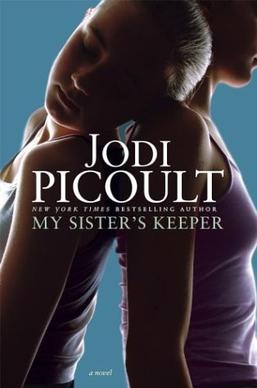
Some are born with a purpose that serves more than just themselves. The movie “My Sister’s Keeper,” follows that exact narrative, where the protagonist’s existence revolves around saving her sister’s life. Nevertheless, after being pushed past her limit, she finally gains the courage to take a stand against the control her parents have over her body.
In the movie “My Sister’s Keeper,” directed by Nick Cassavetes, the protagonist, Anna, is genetically engineered to be a perfect match for her sister, Kate. Kate has a rare form of leukemia, and when her condition worsens, Anna files for medical emancipation. Because she tries to gain bodily autonomy and speak up for herself, her parents become enraged. More specifically, her mother, who tries to interfere with Anna’s legal process. Ultimately, the family is pushed into a very tricky situation, where they are forced to assess whether or not what they are doing is ethical.
In addition to the plot being satisfactory, most of the characters were valuable assets to the story. However, not all of them were necessary for the plot’s development and served more as characters in non-essential side plots. In contrast, the acting had few to no flaws, which is further supported by the movie starring big actors, such as Alec Baldwin and Cameron Diaz. Regarding the story’s quality, it is something that is entirely subjective to each and every viewer. For instance, those who read the book were left unsatisfied with the film’s ending, while those who did not were able to appreciate it without comparison.
According to an article titled “Jodi Picoult On The My Sister’s Keeper Movie Adaptation,” the movie underwent significant edits. The director adapted the book, making it his own and entirely changing the ending, which enraged readers as well as the book’s author, Jodi Picoult. She states in an interview from BuzzFeed News, “I was really upset, so I flew to the movie set, and I went to talk to him, and he pretty much threw me off the set,” said Picoult. Contrary to this, the cinematography was wonderfully executed, and the only issue that arose was that it may have been too flashy. As stated by the article, “’My Sister’s Keeper’ Movie Review,” “Like ‘The Notebook,’ ‘My Sister’s Keeper’ has beautiful cinematography, although it does revel in its own beauty a little too much at times.”
In closing, those who have dealt with parent-related trauma and/or chronic illness would like this film, as it may relate to them. I would recommend it to young and old alike because anyone can take away a valuable lesson or two from this movie. I would not recommend it to close-minded parents, because instead of learning from their behavior, they would only build more resentment and ignore the film’s message. The film is rated PG-13 due to its heavy subject matter, sensuality, language and brief teen drinking. It was decent, but it had the potential to be spectacular. Instead, the director excluded the book’s ending: a jaw-dropping twist that none of the readers saw coming.