

Nurses

According to the Toronto Metropolitan University Pressbooks, nurses perform inspections that involve checking the patient’s symmetry, gait, body position and posture, skin, behavior, etc. Although these inspections might not be as thorough as those of a physician, a nurse’s main priority is to assess a patient’s overall well-being, while also tending to their needs or assisting a doctor during surgery. It’s indisputable that a robot will never be able to replicate the level of care and support that nurses provide for their patients. Artificial intelligence (AI) is merely an engine that absorbs online information produced by humans. So, if there comes a time in the distant future when AI replaces nurses, whatever “emotion” it may be displaying is simply a programmed response that lacks authenticity and genuine connection.
Surgeons

With AI currently struggling to produce fully accurate information, one can assume it would be especially unlikely to replace surgeons. Not only do surgeons have a complex understanding of human anatomy, but they are also able to make quick decisions based on the particular state of a patient’s health. According to the National Library of Medicine, “The act of judgment necessitates a profound understanding of context… a decision cannot be solely predicated upon a rigid adherence to pre-established rules. Rather, it demands a nuanced appreciation of the patient’s unique condition at that specific juncture.” That being said, a lack of proper judgment can lead to poor decisions. In this context, poor decisions can be extremely dangerous and even life-threatening. In addition, the National Library’s research goes on to describe how many of the limitations encountered by artificial intelligence can be aptly compared to those of an on-call physician, who might struggle to cultivate an initial understanding of the patient’s condition. Which is why, as of now, there’s no active push for AI in medical spaces.
Emergency service workers
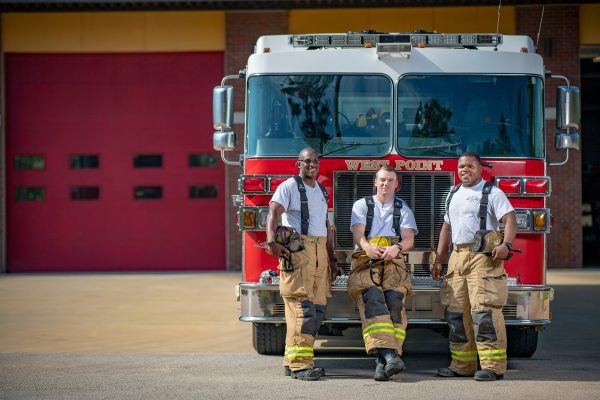
It would also be highly unlikely for emergency service workers to be displaced anytime soon. The jobs of firemen and police are extremely physically demanding and require quick decision-making and swift, clear communication. Policemen have to see beyond verbal cues during times of crisis and often use negotiation tactics to de-escalate particularly volatile situations. By comparison, technology has not advanced to the point where it can understand how a person’s psyche or mental condition may influence their actions. Additionally, in the article “AI Layoffs and the Unlikely Rise of Wildland Firefighting Applicants,” Jefferey Butcher explains how AI should be viewed more as a tool of assistance rather than a full-blown replacement. “Firefighters regularly face life-and-death decisions… No algorithm can replicate the on-the-spot human reasoning and moral decision-making that these situations demand. Even emerging firefighting technologies… are viewed as assistive tools rather than replacements. They support the firefighter but cannot substitute for the human element that is essential to the role,” said Butcher.
Tradespeople
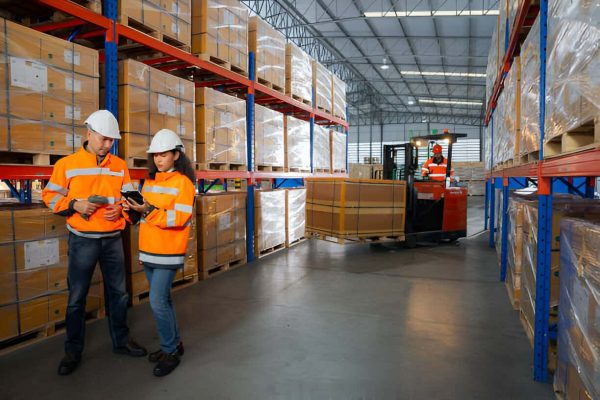
The last group worth mentioning is home service providers, like plumbers, electricians, landscapers and carpenters. According to tomshardware.com, Jensen Huang, CEO of Nvidia, said during a conversation with Laurence D. Fink, CEO of BlackRock, at the World Economic Forum 2026, “This is the largest infrastructure buildout in human history that is going to create a lot of jobs… We are going to have plumbers, electricians, construction and steel workers, network technicians, and people who install and fit out the equipment. In the United States, we are seeing quite a significant boom in [these areas]: salaries have gone up, nearly doubled. We are talking about six-figure salaries for people who are building chip factories or computer factories or AI factories. We have a great shortage in that.” Essentially, AI is increasing the demand for tradespeople, who are responsible for installing things such as cooling systems and networking infrastructure that power AI. These roles are especially vital because they incorporate manual labor, which can’t be easily automated by technology. Although AI may be able to code intricate algorithms and is exceptional at processing data, it’s limited in the realm of handling real-world tasks that necessitate eyes, hands and good judgment.
All things considered, countless barriers make it impractical for certain jobs to be replaced by AI within the near future. A common characteristic among these jobs is the ability to demonstrate sincere human empathy and quality judgment. For this reason, professions that involve human-centered work will continue to play a key role in society.