

“I hope the women of the United States will awaken to the full sense of the influence which they can wield if they accept the responsibility which all power implies.”
— Eleanor Roosevelt, “My Day,” Dec. 10, 1942
Just over 100 years ago, women’s suffrage was first granted in America with the ratification of the 19th Amendment. Today, women fill our offices and courtrooms, exerting immense influence in every aspect of our cities, states and nation. Though the challenges women face throughout their political careers are unique, National Women’s History Month highlights extraordinary women who have overcome and paved the way for young women in politics.
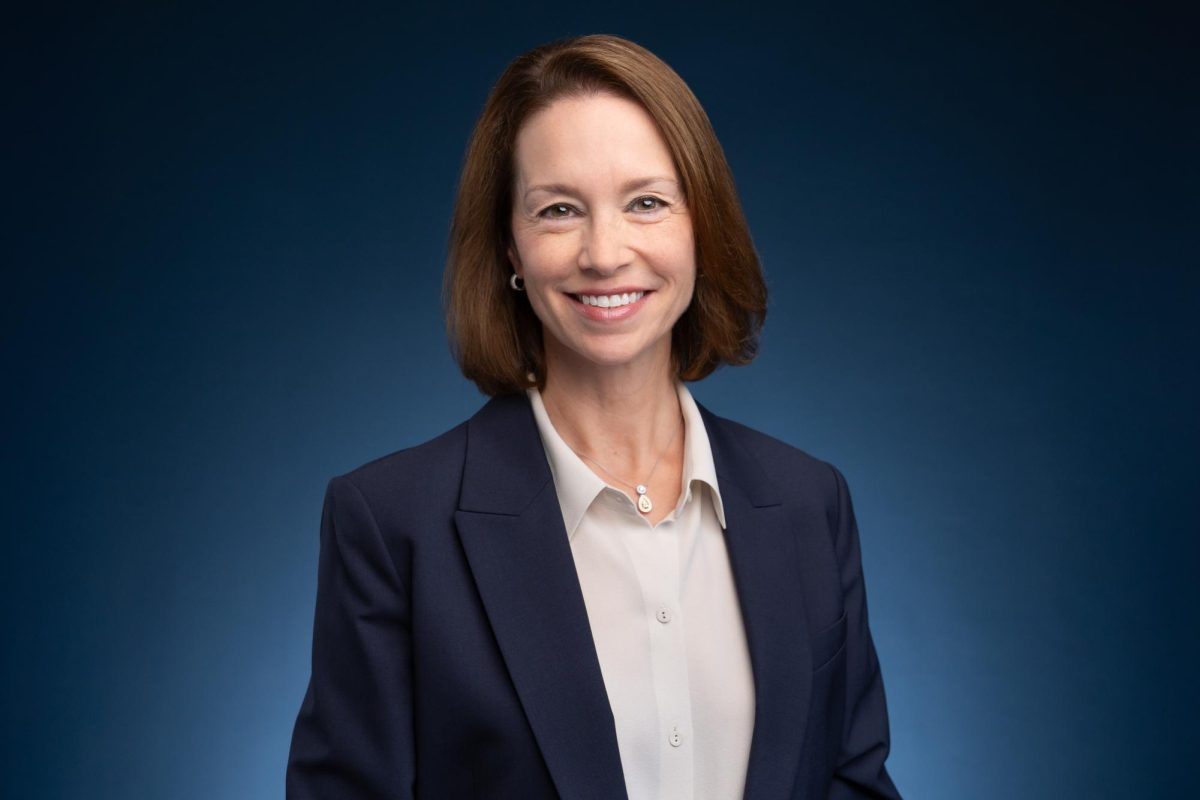
For women, their careers are tested from the start; assumptions are immediately made about what they can or cannot do. Past U.S. House of Representatives member and current President of Augustana University, Stephanie Herseth Sandlin, has experienced this.
“Women tend to be judged based on what they’ve already accomplished, whereas men tend to be judged based on their potential,” said Herseth Sandlin.
Herseth Sandlin was the first woman from South Dakota to be elected to the House in 2004 and served four terms. She was only 33 years old, which made her the youngest woman serving in the House at the time.
“There is still that disparity in business and throughout the culture, and I think it applies to politics. It may be changing, but I still think that it certainly happened to me as a younger candidate,” said Herseth Sandlin.
When she was first encouraged to run for office, she believed she was too young, as the average age of U.S. House Representatives members is late 50s to 60s, with many serving into their 70s. She was an inexperienced, unmarried woman, which made it discouraging. However, she was encouraged by women of her own age, as well as of her mother’s generation, who pointed out that men in their 30s have won their races as first-time candidates; for example, John Thune, Larry Pressler and Tom Daschle. Herseth Sandlin credits her mother for motivation and support, but also her trusted friend, Judy Olson Duhamel, who was the chair of the South Dakota Democratic Party from 1998 to 2006, as a sounding board during her run for office.
“I had gotten to know [Duhamel] when she served in the legislature with my dad. She’d been a great friend and advocate, and she really helped me after I won my primary election,“ said Herseth Sandlin.
It was the women of the older generation who shared wisdom and experience with Herseth Sandlin, helping her immensely to recognize what she is capable of and face the assumptions made about her with confidence. Because of her deep gratitude to all the women who mentored her throughout her career, Herseth Sandlin stresses the importance of women supporting one another in every aspect of life.
“As long as women help each other by sharing their stories and their experiences, it’s easier to be prepared for the types of assumptions that people will make. And also to be confident about what you have accomplished by articulating what you believe your potential is to those that you encounter, whether in politics, in education or in business,” said Herseth Sandlin.
There is also a power that comes from the accomplishments of the women who came before. Herseth Sandlin considers her grandmother, Lorna Buntrock Herseth, a role model in many ways. She was a pioneer in her family as the first to hold public office; she was elected at the county level as the superintendent of Brown County Schools in 1936. She later earned bipartisan support for her election as the South Dakota Secretary of State, serving from 1973 to 1979. In a broader sense, some remarkable women have opened new doors and shaped the scene for women in politics. The first woman to be elected to Congress in 1916, known for her strict pacifism and her key role in granting women’s suffrage, was Jeannette Rankin. A trailblazer, an advocate for education and labor rights and the first black woman elected to Congress in 1968, Shirley Chisholm. An aggressive activist for women’s, civil, and human rights, redefining her role as the First Lady of the United States from 1933 to 1945, Eleanor Roosevelt. Herseth Sandlin defines Roosevelt as especially inspiring to her because of her upbringing and her contribution to the United States.
“She wasn’t in elective office, but we know how influential a voice she was. Her practicality, her prudence, her compassion, but also being someone who was involved politically,” said Herseth Sandlin.
These inspiring women have opened new doors for any woman who is driven to make a change, whether in politics or not.
“We all go through the doors that women who got through them first keep open for us,” said Herseth Sandlin.
The young women of today stand on their predecessors’ shoulders to find their own paths and make their own futures in politics, education, healthcare, business, public service or anything they are called to do, and the world belongs to them.