

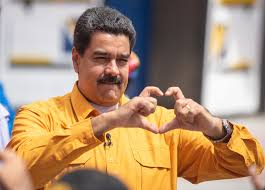
On early-morning Jan. 3, the Venezuelan leader, Nicolás Maduro, was captured and taken to an undisclosed location by the U.S. military. This mission was part of a larger-scale strike operation, which sources say was meant to “distract” from the mission. Reportedly, the attack is estimated to have caused around 75 fatalities, 0 of which were US forces. Since the attack, the U.S. has not expressed intent to take further military action in Venezuela.
Two days later, Maduro appeared before a U.S. federal court, where he was charged with drug, weapons and narco-terrorism charges. Despite pleading not guilty, Maduro faces a potential life sentence.
The move comes after months of deployment, including thousands of US military troops, an aircraft carrier and dozens of warships. This military buildup, the largest in decades, came after President Donald Trump had accused Maduro of drug trafficking and narco-terrorism. Trump claims that these factors have been contributing to safety issues inside the U.S.
The mission faced backlash, mostly directed at Trump, with numerous claims that it was an overreach of Trump’s executive power. The operation was done without prior congressional approval or notice. The Trump Administration has responded to these claims, saying that any prior notice or approval may have led to information leaks that could compromise the success of the plan.
Despite some backlash, most Venezuelans took to the streets to celebrate the capture of Maduro and his dictatorship. Taking office in 2013, he has consolidated his position through oppression, censorship and manipulated elections. In 2024, Edmundo González Urrutia won the presidential election but was regime barred by Maduro. Since then, many countries, including the U.S., have declined to officially recognize Maduro as Venezuela’s official leader. Furthermore, his rise to power has been followed by Venezuela’s status as one of the worst humanitarian crises in the world. This has largely been due to the famine, medicine shortage, corruption and infrastructural issues throughout Venezuela. Since 2014, over 8 million Venezuelans, around 25% of the country’s population, have migrated out of the nation.
The event raises questions about U.S. intent in the region. Secretary of State Marco Rubio is currently overseeing U.S. efforts in Venezuela. Rubio and several other officials have expressed intent to transition the country into a long-term democracy. However, Rubio and other officials have announced short-term goals that include stabilization of the country, fighting drug trafficking and seizing increased control over Venezuela’s large oil deposits, with Trump claiming that U.S. oil companies would be allowed to enter and begin operations in Venezuela. Reportedly, certain U.S. oil companies have scheduled planning visits to the country as early as March. Despite this, details released on the exact mechanics of the U.S.’ plans remain relatively slim.
Internationally, many world leaders have condemned the U.S.’ actions, including neighboring countries to Venezuela. The actions were also condemned strongly by some of Venezuela’s allies, like Russia and China. Despite this, no further action has been taken against the U.S. Unlike these nations, Argentina, Ecuador, El Salvador and Trinidad and Tobago all expressed positive attitudes of appreciation towards the move.