

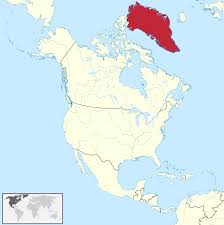
As the presidential campaign of Donald Trump was moving along in mid-2024, one of the many hinted possibilities if he won the election was that America would acquire Greenland. While there were suggestions at the start of his term in 2025, like making Canada the 51st state, up until a month ago, Greenland had never been this close to being in U.S. hands.
The Arctic Ocean has always been a competitive and strategic location on the world stage, as it contains vast reserves of oil, natural gas and minerals. And for the United States, it offers a buffer zone between one of the country’s biggest political adversaries, Russia.
“…we are going to do something on Greenland, whether they like it or not, because if we don’t do it, Russia or China will take over Greenland, and we’re not going to have Russia or China as a neighbor,” said Trump in a press conference on Jan. 9.
While these claims were originally seen as not serious by the U.S. Congress, the situation would become more legitimate as threats of tariffs and invasions against our North Atlantic Treaty Organization (NATO) ally began to spread.
Greenland is an autonomous territory within the Kingdom of Denmark. Danish officials are rejecting the idea of any U.S. takeover. They report that Danish troops are on standby, ready in defense, and are even willing to invoke Article 5 of NATO, declaring that other NATO nations would be mandated to assist. Germany, Sweden, France, Norway, the Netherlands and Finland have also preemptively sent troops in the event of an attack. Luckily, all threats of invasion were put to rest at the World Economic Forum in Davos, Switzerland.
“I won’t use force to take Greenland,” said Trump, along with boasting about a potential deal, saying he had a framework deal made with NATO.
Throughout this situation, there have been two reasons that would make acquiring Greenland worthwhile. Number one is the apparent threat posed by the Chinese and Russian presence, and Denmark’s apparent inability to defend the island properly.
“All we’re asking for is to get Greenland, including right, title and ownership, because you need the ownership to defend it,” said Trump.
However, this claim does not align with the fact that the United States can already defend Greenland. According to a 1951 treaty, the United States has nearly unrestricted access to put military bases on the island, meaning they do not have to own it to defend it. The United States already has a base called Pituffik Space Base, which acts as a deterrent for possible missile strikes.
The other reason is economic. Greenland ranks eighth in the world for rare earth mineral deposits, as well as untapped oil reserves in estimation up to 31 billion barrels of oil. With China supplying around 70% of rare earth elements, a large acquisition of said metals would decrease the United States’dependence on its foreign rival. Despite this economic prospect, no rare earth mining has taken place on the island to this date. The harsh temperatures, coupled with the fact that most deposits are covered by glaciers, make mining and transportation very difficult and expensive.
While the idea of acquiring Greenland has not come to pass, the externalities of U.S. actions are already detrimental to world relations. The United States wants Greenland for security against its rivals, neglecting the fact that Greenland is a part of Denmark, which is a part of NATO. NATO is the best deterrent against Russian aggression, and trying to start a feud over who can properly defend a mutually defended island only creates a divide. Some politicians even describe the United States obtaining Greenland as the death of NATO.