


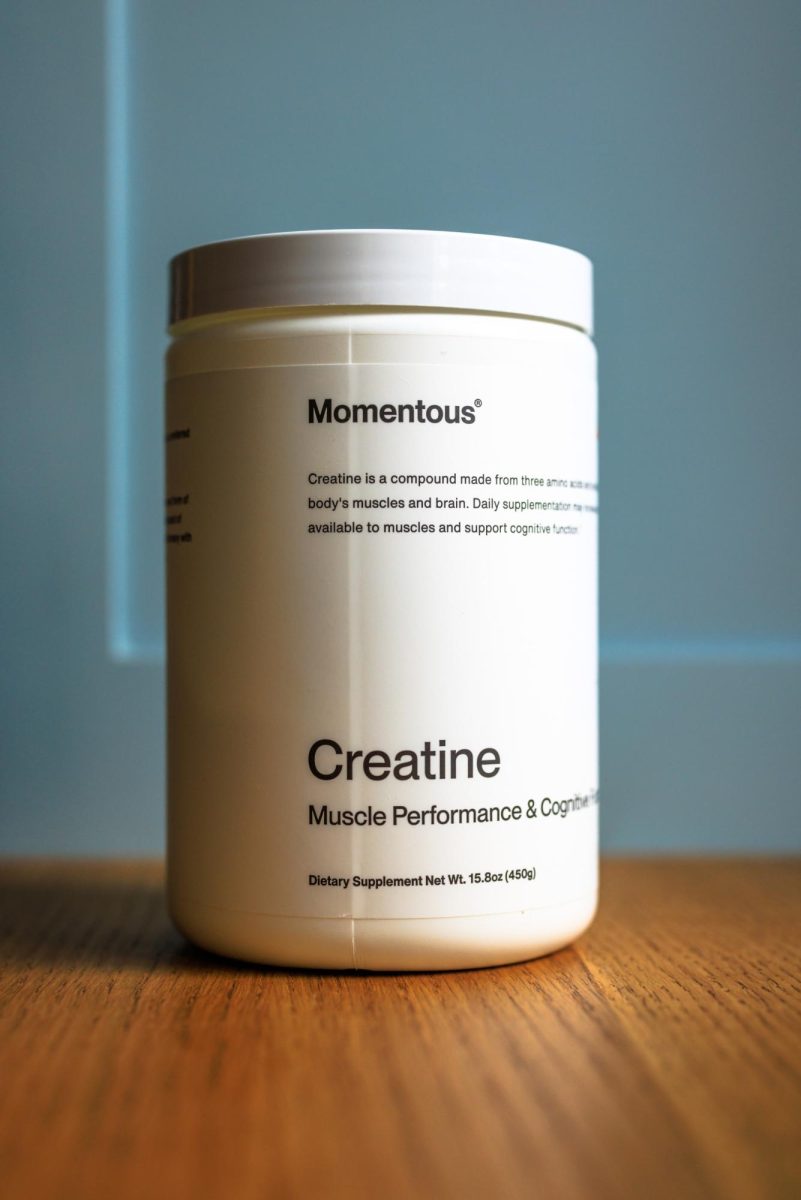
Have you ever wondered if there was a healthy way to boost your athletic and academic performance at the same time? The compound called creatine is a daily supplement that has a multitude of health benefits that can specifically help high school students.
Creatine is naturally found in all humans and is produced in the liver, pancreas and kidneys, as well as in seafood and red meat. All of these sources lead humans to produce about 1-2 grams daily. Creatine is typically found in the muscles and, to a lesser extent, in the brain, where it is converted to phosphocreatine and then used to produce adenosine triphosphate (ATP). This boost in energy is why creatine has been commonly used among athletes for decades.
Creatine research is ongoing, but the effects that have been discovered so far are very promising. According to the Cleveland Clinic, physical benefits of creatine for people who regularly work out include, but are not limited to, improved exercise performance, better recovery after intense exercise, increased muscle mass, prevention of severe muscle injury, better tolerance for intense activity, reduced dehydration and reduced cramping. Creatine enhances bodily functions and provides the aforementioned benefits. When exercising, you create micro tears in your muscles, which are more quickly repaired when a higher presence of creatine is in your muscles. Creatine also helps with water retention, increasing water content in our muscles at the intercellular level and leading to faster muscle growth. For the percentage of high schoolers in athletics and possibly looking to continue into college, creatine could be a game-changer.
Another side to creatine’s benefits is in the brain. The saying that your brain is “a muscle” is almost made true by creatine. According to the Mayo Clinic, creatine supplementation might improve performance during cognitive tasks, especially in older adults. Creatine plays a role in neurogenesis, the formation of new neurons in the brain. While the benefits of less cognitive decay are very promising, most teens aren’t at that stage yet. However, a study that was reported on by the BBC shows a correlation between taking creatine and decreased effects of sleep deprivation. Subjects who took creatine after being deprived of sleep had much faster processing speeds when given cognitive tasks. While the study was small and volunteers took 10 times the recommended amount of creatine, the results are encouraging, especially to high schoolers who, on average, are sleep-deprived.
While still promising, creatine does have some downsides. Taking the supplement leads to water retention, which can lead to unwanted weight gain and may be discouraging for some. It can also lead to dizziness, nausea, vomiting, diarrhea and excessive sweating on rare occasions. Other possible areas of concern are for people with kidney disorders, due to possible stress caused by more waste being filtered, as well as excess caffeine consumption, which decreases the efficacy of creatine. On top of all of this, creatine can be expensive, with some brands costing up to $40 for 60 servings. Taking all of this into consideration, please talk with your primary care provider before starting any new healthcare routine.