

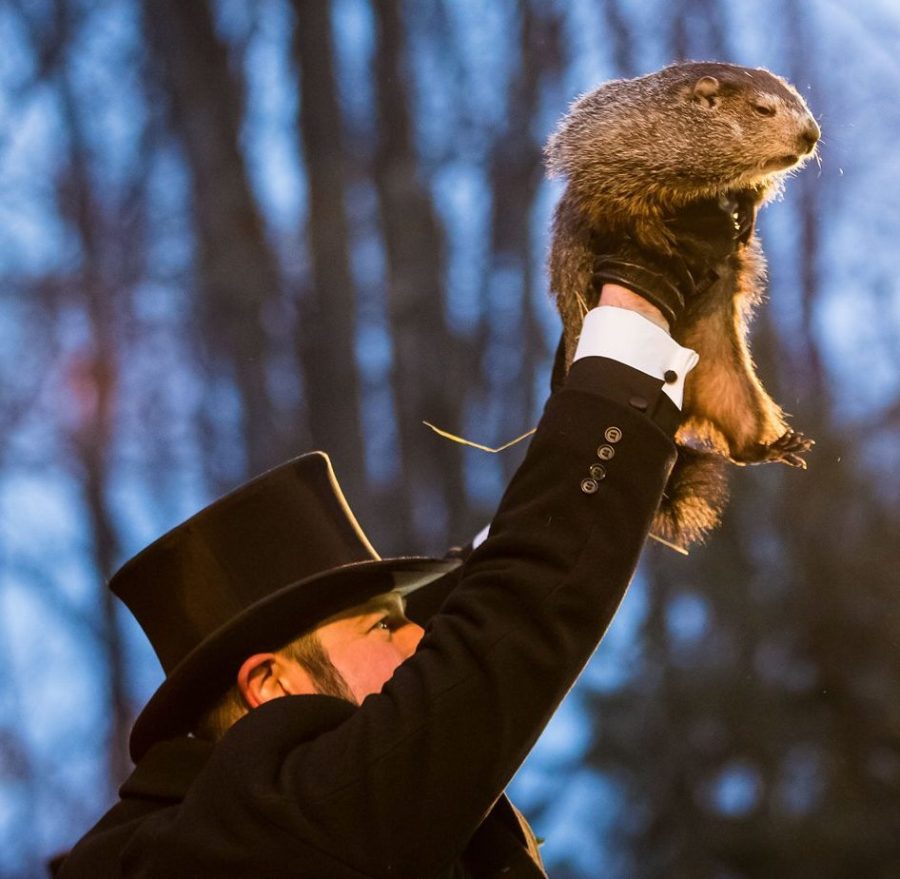
Groundhog Day is held annually on Feb. 2, featuring a meteorologist groundhog who predicts the weather based on its shadow. But is Groundhog Day a real weather forecast, or is it just an excuse for people to have fun?
The first Groundhog Day was in 1887 and has since become a major celebration at Gobbler’s Knob in Punxsutawney, Pennsylvania. The groundhog, Punxsutawney Phil, emerges around sunrise at approximately 7:30 a.m. EST. If Phil emerges from his burrow on this particular day and sees his shadow, he will retreat to his den, and winter will go on for six more weeks. If he does not see his shadow, it is believed that spring will arrive early.
Even though Groundhog Day is quite popular, it is not very accurate. A shadow is caused by the sunlight and cloud cover, which does not affect future weather conditions. Out of 139 official Groundhog Day predictions, Phil has seen his shadow 110 times and has not seen it 21 times, with some years missing data. In the past decade, his predictions have been correct only four times. Overall, his accuracy rate is estimated to be between 35% and 39%. So why do people continue to celebrate it?
Groundhog Day is a culturally significant day to many people in the Pennsylvania area. For many of these people, it is not about accurate weather predictions but rather about community and tradition. Towards the end of winter, it can start to feel like it is never going to end. Groundhog Day is an escape from winter and gives people hope for an early spring. It is also a time for people to get together and celebrate the many Groundhog Day traditions, like local festivals featuring music, food and entertainment.
It also continues to be celebrated because of its social media presence. News broadcasts, online posts, headlines and classroom activities all center around Phil’s prediction, which add fun and excitement to an otherwise boring time of year. By combining an old tale with modern media, Groundhog Day will likely continue throughout the younger generations.