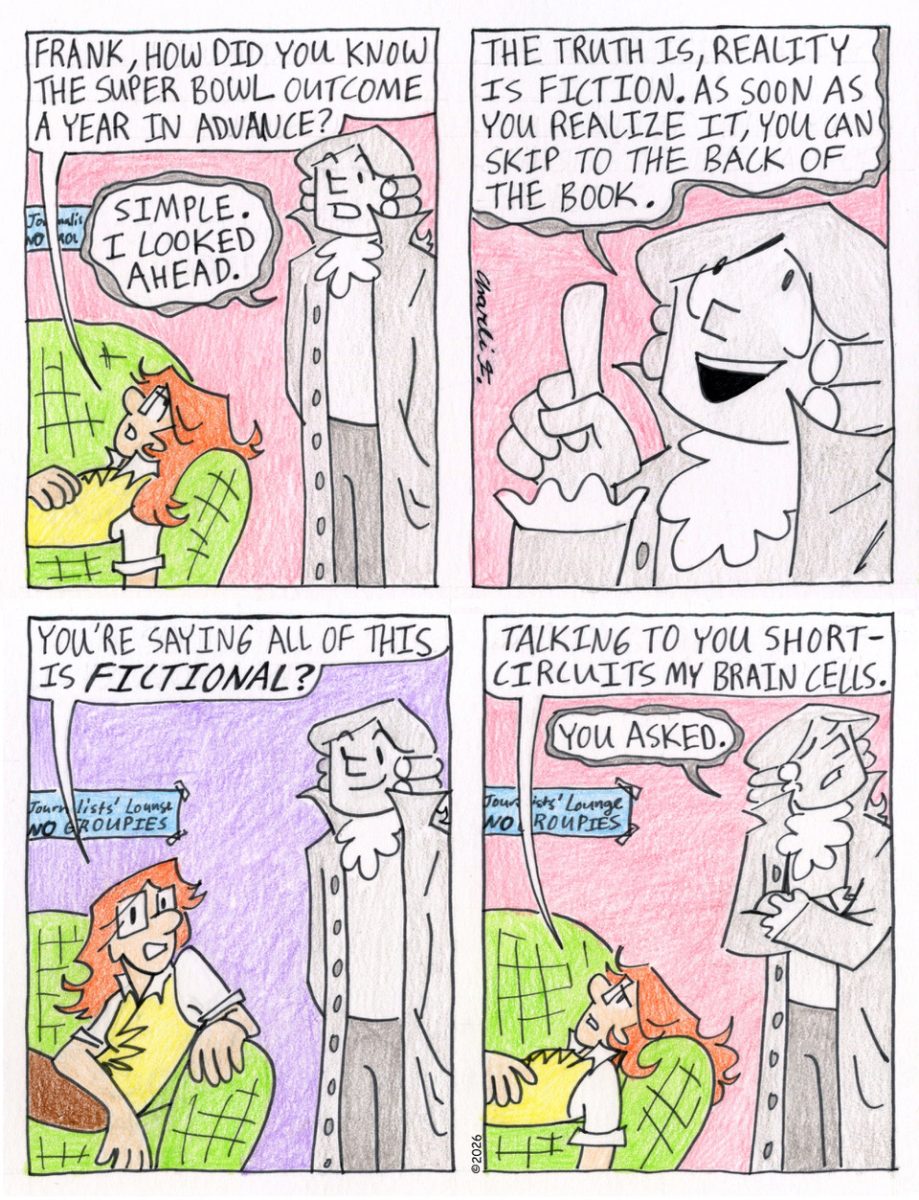



The never-ending expansion of medical diagnoses reveals that the human psyche may be more complex than previously thought. Interestingly, one light-hearted TikTok sparked major speculation about an internet term that could one day become a valid medical diagnosis.
According to Dictionary.com, “[The popular] main character [trend] is a [movement] on the video app TikTok in which a person pretends their life is a movie and they are the main character in it.” The trend was set off by TikTok creator @ashlaward in 2020. She encouraged viewers to romanticize their lives and embrace a sense of self-importance. Initially, many were inspired by her motivational message, which promoted appreciation for life’s small but precious moments and self-love. However, this optimism quickly faded as the trend resurfaced in 2024 with rather negative connotations. Many began suggesting that “playing” the main character is self-centered as opposed to empowering.
Eventually, experts took notice of the trend, labeling the pseudoscientific diagnosis “main character syndrome (MCS).” Although MCS is viewed as a humorous and unserious topic of discussion among the general public, psychologist Susan Albers explains that the “syndrome” can pose real consequences for one’s personal life. “People with [MCS] are often preoccupied with their own needs and accomplishments, making it difficult to support their partner’s emotional experience,” says Albers. Although many mistake it for narcissistic personality disorder (NPD), Albers notes that, unlike NPD, MCS stems from a combination of delusion and insecurity. As a result, those with MCS may inadvertently harm others due to an obsession with how they are perceived.
Despite it being widely looked down upon, indigotherapygroup.com suggests that when explored healthily, MCS can be quite beneficial. The article clarifies, “Main character energy is all about stepping into your power and prioritizing your own growth and happiness.” Consequently, MCS allows one to take charge of their life, practice self-love and focus on their own journey. Nonetheless, indigotherapygroup.com also acknowledges that with advantages come disadvantages, stating “…like anything, it’s about moderation. When main character energy shifts from self-empowerment to self-absorption, it can start to alienate others or lead to unrealistic expectations.”
Ultimately, MCS is neither inherently beneficial nor harmful. Rather, it is a new concept that warrants psychological investigation, as we have little scientific knowledge about it. As a matter of fact, with greater insight into its effects through research, we as a society can collectively determine what steps to take to ensure MCS is understood and properly addressed. On another note, despite a lack of research surrounding MCS, Albers made it abundantly clear that one can learn to navigate it mindfully, stating, “You can use main character energy as a form of self-care and preserving boundaries without stepping on other people’s boundaries.” Furthermore, with therapy, authenticity and a variety of other strategies that help promote self-awareness, individuals can avoid the negative tendencies associated with this “disorder.”